
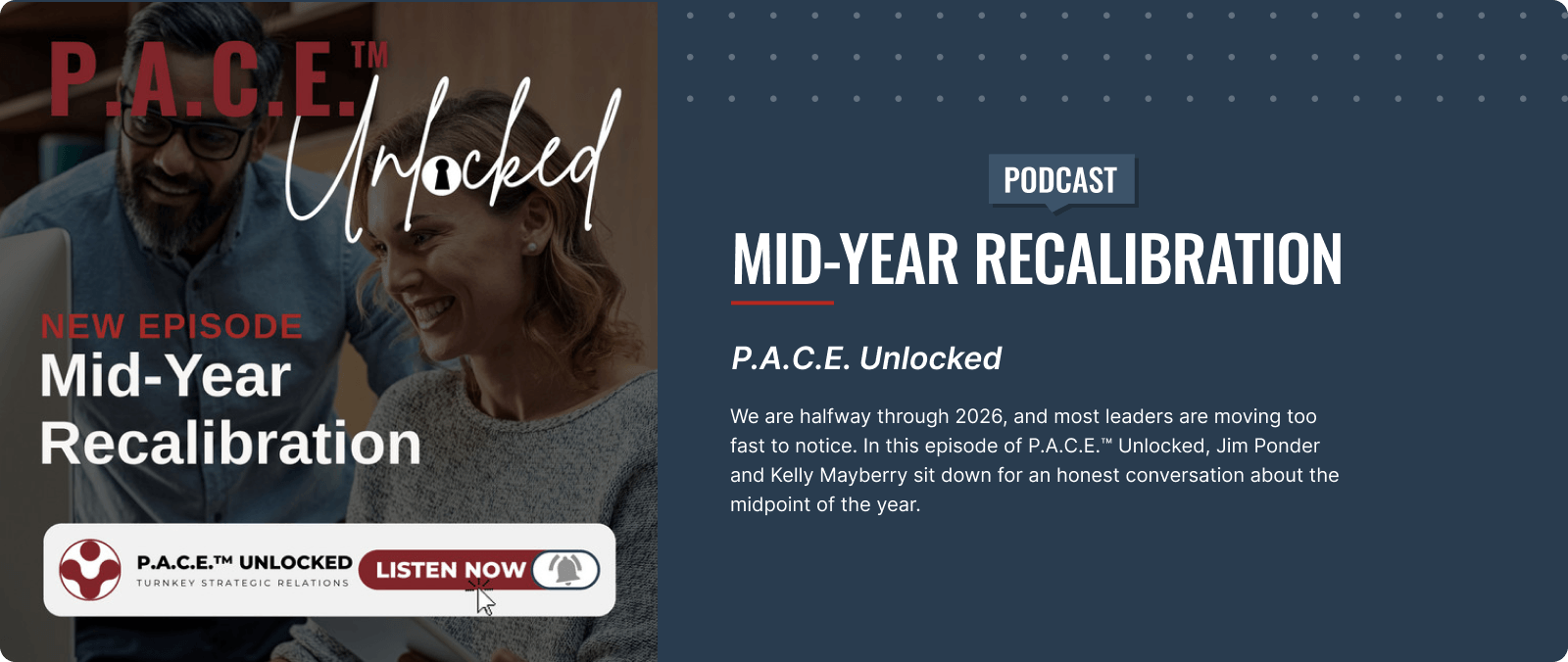

Episode 10: Mid-Year Recalibration

podcast episode 10

We are halfway through 2026, and most leaders are moving too fast to notice. In this episode of P.A.C.E.™ Unlocked, Jim Ponder and Kelly Mayberry sit down for an honest conversation about the midpoint of the year: why so many teams arrive in June tired, why goals quietly drift out of alignment between January and summer, and how to recalibrate without throwing out the plan.

In this episode:

  • Mid-year drift is normal, and it is structural. Teams keep layering new priorities on top of old ones without taking anything off the plate. The fix is a deliberate checkpoint, not more effort.
  • Slowing down to speed up is a discipline, not a retreat. A pause without focus is coasting. A pause with focus is recalibration.
  • A goal can change its route without changing its destination. Most goals need a different path to the same outcome. A smaller set genuinely need the destination itself to move.
  •  Clarity decays quietly. Ask three people to name the organization’s top three goals, and the gaps in their answers show exactly where alignment has gone foggy.
  • Celebrating booked wins is part of the system, not a reward saved for later. It is how a team sustains pace through the second half.

Transcript

No content available.

FAQ

Why does mid-year feel so different from any other point in the year?

Because the calendar suddenly gets concrete. Summer, school schedules, and year-end planning all come into view at once, and leaders realize how fast the second half will move. That awareness is useful. It is the natural moment to check whether the direction still holds.

A lot of leaders are nervous about adjusting goals mid-year. How do you get past that?

Reframe what a pause means. The concept is slowing down in order to speed up. You are not abandoning focus, you are making sure the focus is pointed at the right thing. Setting the expectation that recalibration is normal, not a failure point, is the leader’s job.

How do you know whether to change the goal or just change how you reach it?

Separate the route from the destination. If the outcome you want still stands, keep the destination and adjust the route around whatever changed. If competing priorities have genuinely shifted what matters, the destination itself moves. Most goals only need a new route.

How does a leader tell if alignment has slipped?

Ask, then listen. Ask a few people to name the organization’s top three goals and just listen to the answers. The clarity that felt obvious in January gets foggy by mid-year if no one maintains it.

What is the one thing that makes the second half of the year the best one?

Reconnect people to the mission. Teams need to feel connected to why they show up every day. If the leader does not feel that connection, the team will not either. After that, small shifts beat full resets.

Pop Demo Office

Ready to Transform Your Business?

Book a Demo & Unlock The Turnkey Goal System Benefits.

Logo