

Most leaders don’t wake up worried about metrics. They wake up worried about drift.
Priorities feel clear at the top, but execution looks uneven further down. Teams stay busy, yet progress feels harder to explain. Results arrive later than expected, or not at all. The problem usually isn’t effort or intent; it’s visibility.
This is where performance tracking earns its place. Done well, it creates shared clarity around what matters, how progress is measured, and where attention should go next. It reduces surprises, builds accountability without pressure, and gives leaders confidence that execution is actually moving in the right direction.
This article explains how performance tracking works in practice, why it matters, and how organizations use it to strengthen alignment, productivity, and long-term results.
What Is Performance Tracking?
Performance tracking is the ongoing process of monitoring progress toward clearly defined goals at the individual, team, and organizational levels. It focuses on outcomes, not merely activity, and provides regular visibility into whether priorities are being executed as intended.
Unlike performance evaluation, which is typically periodic and retrospective, performance tracking is continuous and forward-looking. Evaluations look back to assess results; tracking looks ahead to guide action.
When leaders ask, “What is performance tracking?”, the most useful answer is this: it is the system that preserves a clear line of sight between strategy and daily execution. Individuals measure progress against defined goals. Teams monitor shared outcomes and cross-functional dependencies.
At the enterprise level, leaders review integrated indicators to evaluate overall organizational performance and determine whether the business is advancing in alignment or beginning to fragment under pressure.
The value comes from connection. When goals, measures, and updates are aligned across levels, work stops feeling abstract. People understand not only what they are responsible for, but why it matters right now.

Why Performance Tracking Matters for Organizations
Most organizations don’t struggle because they lack plans. They struggle because execution becomes noisy.
Clear tracking systems help leaders see where focus is holding and where it’s slipping. That visibility changes how decisions get made and how teams operate day to day.
Alignment Across Levels
When performance is tracked regularly, each person’s goals are directly tied to the team’s goals and the organization’s larger goals. That alignment reduces duplicated effort, prevents conflicting priorities, and increases strategic speed. Individuals can understand others’ expectations, which helps them make better choices about where to spend their time.
Productivity Without Pressure
When priorities are clear and progress can be seen, productivity goes up. Teams don’t have to guess what matters most; they focus on agreed priorities.
Early Identification of Gaps
Tracking problems surfaces them while they are still easy to fix. A stalled goal, an overloaded team, or a metric that isn’t aligned shows up early enough to be fixed without getting worse. This allows changing course instead of doing a post-mortem.
Data-Informed Leadership
Strong tracking helps people make decisions based on data without taking away their judgment. Leaders can use their experience and real signals from the organization to make better decisions about resources, sequencing, and strategic focus.

Benefits of Performance Tracking
The benefits compound over time because tracking improves how organizations learn and adapt, not just how they measure.
Improves Employee Accountability
When accountability is fair and easy to see, it works best. Employees feel like they own the results when they have clear goals and can see their progress. It becomes possible to self-correct and keep track of their commitments with confidence instead of relying on oversight.
Encourages Transparency Across Teams
When everyone can see each other’s work, it breaks down silos. Teams can see how their work fits in with other people’s and where they need to work together. Discussions shift from opinion-based debate to data-informed problem solving.
Identifies Training and Development Needs
Results that follow a pattern often show that there are skill gaps, unclear expectations, or problems with the process. Tracking employee performance helps leaders tell the difference between problems with effort and problems with the system. This lets them put development resources where they will really help.
Boosts Employee Engagement
People are more likely to be engaged when they can see progress and understand how it affects them. When employees track their goals, they can see progress and build momentum naturally.

Methods of Performance Tracking
There is no single method that fits every organization. Effective tracking combines multiple approaches, each serving a specific role.
Key Performance Indicators (KPIs)
KPIs turn priorities into results that can be measured. The best indicators are closely related to strategic goals and are looked at on a regular basis. A shorter list of important KPIs is better than a long list of easy-to-measure data.
Real-Time Dashboards and Analytics
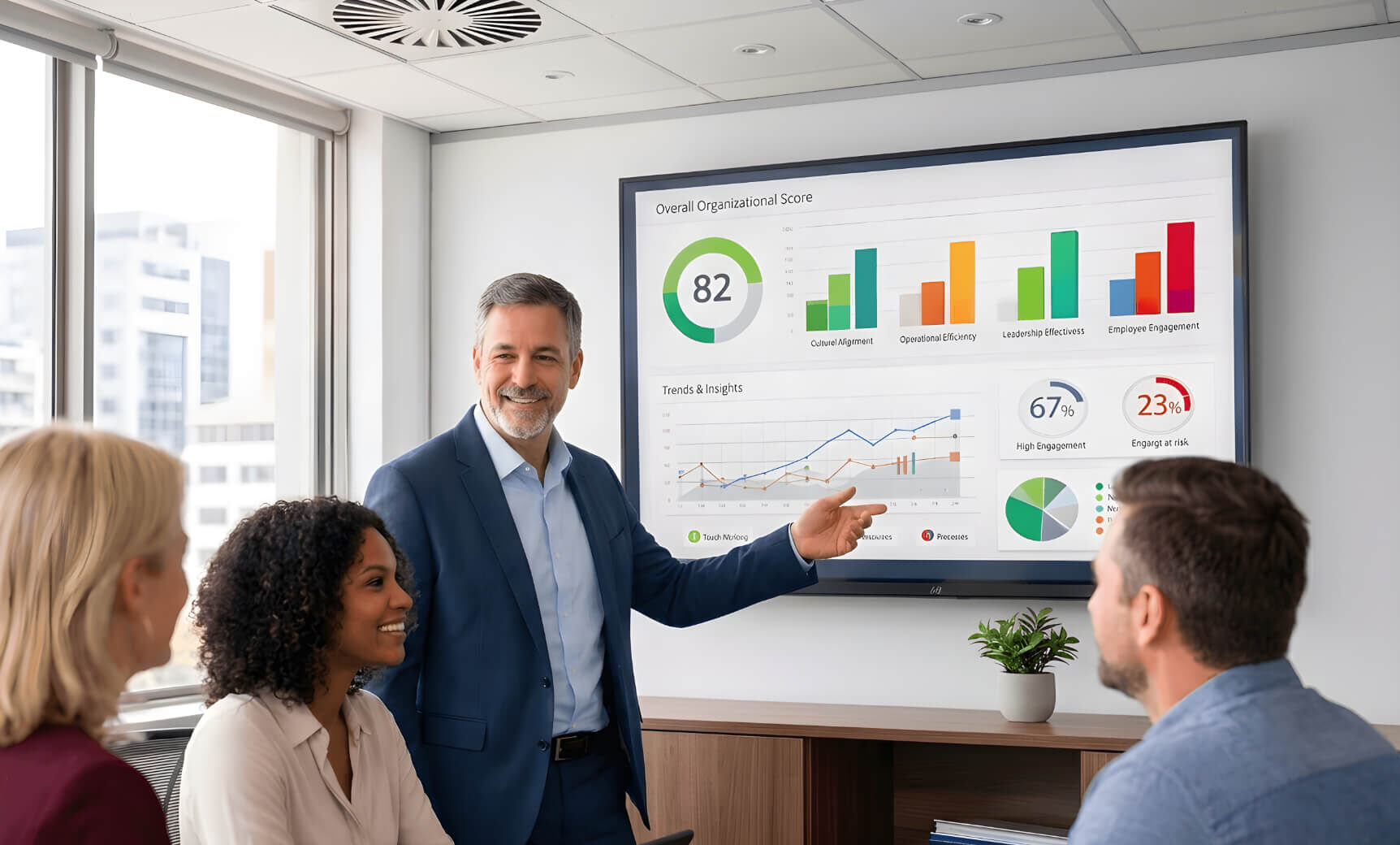
Dashboards provide current visibility into progress and trends. They allow leaders and teams to spot changes early and respond quickly. The goal is not reporting volume, but clarity around what requires attention now.
Organizational Health Assessments
Quantitative metrics don’t always tell the whole story. Organizational health assessments take into account qualitative signals like trust, clarity, and alignment that have a direct impact on how well things are done. Keeping track of both results and the health of the organization gives context and helps to stay on track.
Continuous Feedback Systems
Regular check-ins and feedback loops give quantitative data a human touch. They explain why the results are what they are and help teams make changes before problems get worse.
Tools and Technologies for Performance Tracking
Tools should help with clarity and rhythm of execution, not make things more complicated. The best systems make a clear distinction between keeping track of work and keeping track of performance.
Organization Performance System by TurnkeySR
Turnkey Strategic Relations’ Organizational Performance System (OPS) provides an integrated, enterprise-level approach to execution. OPS is meant to help leaders understand how strategy, priorities, and execution all work together in the business. By making performance visible on a large scale, it helps with alignment, clarity, and predictable execution.
Goal Execution and Employee Tracking with TGS
The Turnkey Goal System operationalizes goal execution at the individual and team level, while OPS provides the system. This is when keeping track of organizational goals becomes useful and reliable. Without using subjective scoring or yearly reviews, TGS allows setting cascading goals, getting regular updates, and seeing progress in real time.
TGS helps with disciplined execution and fewer surprises by focusing on results, cadence, and finding problems early.
Project Management and Collaboration Tools
Tools for projects, like Asana or Monday, keep track of tasks, due dates, and deliverables. They are helpful for keeping track of work, but they are not meant to answer questions about performance. Project tracking shows what is going on. Tracking performance shows if goals and priorities are being met. The difference is important.
Analytics and Business Intelligence Platforms
Analytics tools combine data from different systems to find patterns and trends. They give more insight when setting clear goals and follow through on them. They don’t usually help with alignment on their own.
Conclusion
Effective performance tracking is not about monitoring or controlling people. It’s about making sure everyone knows what’s important and how to measure progress.
Companies that do this well focus on results, stick to a regular schedule for carrying out tasks, and use data along with their own judgment. They use tracking to make things less uncertain, help development, and keep priorities clear when things get tough.
When tracking is integrated into daily work, accountability becomes a natural outcome rather than a forced behavior. Leaders gain peace of mind. Teams gain focus. Execution becomes more predictable.
That is why performance tracking continues to matter not as a reporting exercise, but as a stabilizing system that helps organizations move forward together.

