Stay Updated on Turnkey

Accountability is not a people problem. It is a structural one. Most executives who reach that conclusion have already had the conversation more than once: the manager who does not follow through, the team that misses commitments it agreed to, the steady pattern of good intentions paired with inconsistent execution. The accountability struggles persist anyway. When the same failures repeat across different people and different teams, the variable is no longer the people. It is the structure they operate inside.
It’s exhausting to lead in the midst of constant flux, and not just for you. It is draining on your entire team. People get tired when your organization passes through one transition after another. They get frustrated and organizational health suffers. Eventually, people just stop caring. That’s change fatigue. The good news? It can be fixed. In this guide, I’ll give you an insight into what change fatigue is, why it occurs, and how you can prevent it as a leader.
In many organizations, feedback is still a one way street. It is a formal, often dreaded, assessment delivered from a manager to an employee. This traditional model often falls short, suffering from recency bias and creating anxiety rather than inspiration. It fails to foster the kind of trust and psychological safety that is essential for high performing teams. The annual performance review, intended to be a tool for development, has become a source of tension that can erode trust and stifle potential.
Most companies recognize that solid leadership propels growth, yet only a handful possess the tools to measure their leaders’ performance. Without quantifiable metrics, organizations are left to guess, risking missed opportunities and underperforming teams.
In the dynamic landscape of modern business, the very notion of “performance reviews” has become a source of dread for many. It is often perceived as a bureaucratic exercise, a one-sided evaluation, or even a punitive measure. At Turnkey Strategic Relations, we recognize that true growth stems from connection, not criticism. This understanding has led us to fundamentally transform how organizations approach performance conversations, moving beyond the outdated concept of reviews to embrace what we call P.A.C.E.™ Checkpoints and Learning Moments Discussions.
Change shows up in all sorts of ways. One month, you’re training the team on a new software package. The next time you’re rolling your desk down the hall because departments have merged. It doesn’t give you a schedule or wait until everyone feels ready. If you’re running a team, you’ve probably felt that mix of anticipation and dread.
Performance reviews are one of the most overlooked opportunities in business. In too many organizations, they happen once a year with little preparation and even less impact. Employees walk away uncertain. Managers feel like they are just checking a box. And leadership has no clear way to connect individual performance to company outcomes.
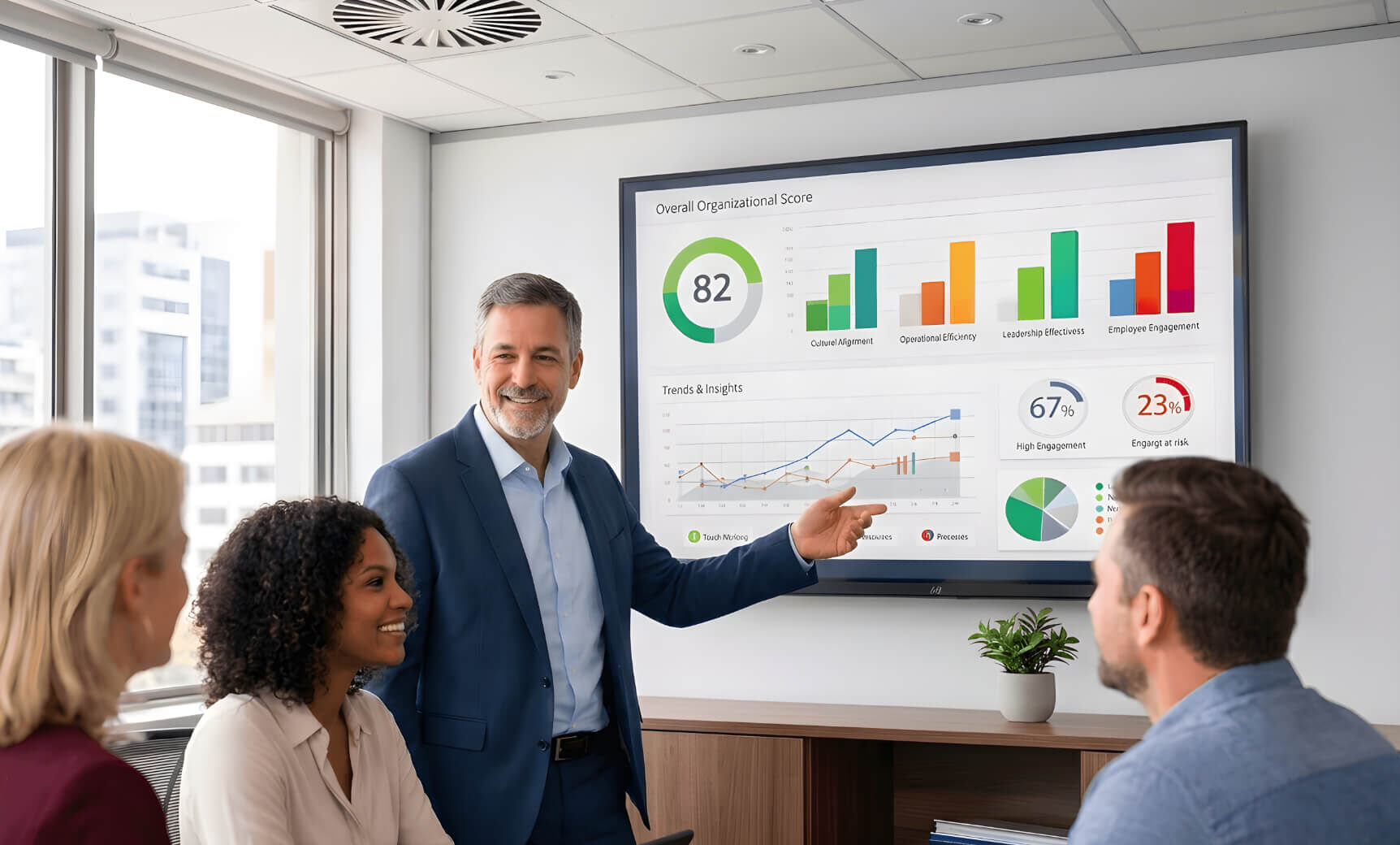
Picture this: you wander through the office and trade small talk, hoping to sense how people feel. Those moments are pleasant, but they rarely reveal why someone is invested or planning to leave. That is why asking what is an engagement survey is matters. You need a method that captures more than mood. Those answers guide choices that boost performance, loyalty, and morale. Still, an engagement survey alone can miss the unspoken issues and values shaping workplace culture. Enter the Organizational Health Assessment, which provides a deeper lens than engagement surveys alone to reveal the real story and moves your team forward.
In the relentless march of modern business, agility and adaptability are lauded as paramount virtues. Organizations strive to pivot quickly, innovate constantly, and respond seamlessly to market shifts.
In today’s fast-changing business world, steady development seldom happens by chance. It happened because people made purposeful choices, worked together, and had a clear plan for the future. The name of that roadmap: strategic planning. It is an important skill that helps companies deal with uncertainty, align their staff, and move forward with confidence.
In an era of relentless change, the most valuable asset an organization can possess is not just its technology or its market position, but the collective mindset of its people. Specifically, a growth mindset, the belief that abilities and intelligence can be developed through dedication and hard work is the bedrock of continuous evolution and sustained success.
Change, as they say, is inevitable, especially for business. Whether it’s a system upgrade, a new business direction, or a shift in leadership, change has a way of showing up with real consequences.
There are few things as crucial to the success of a company as a skilled leader. A successful leader inspires teams, adapts to change, and stays calm under pressure. Executive coaching gives managers the tools they need to become this sort of leader; a leader that confidently makes important decisions and keeps up with a changing business landscape.

Subscribe to our newsletter

If you find our blogs informative, you will not want to miss out on our monthly newsletters.

This field is for validation purposes and should be left unchanged.

Logo
Logo
Pop Demo Office

Ready to Transform Your Business?

Book a Demo & Unlock The Turnkey Goal System Benefits.